Bare concrete is cold, dusty, and stained. It makes even a nice basement feel like a place where old paint cans go to retire.
Leave it alone and every sock turns gray, every spill leaves a mark, and the room never feels finished. Meanwhile, tearing it all up for new flooring can eat your whole budget.
Good news: you can fix the floor you already have. Below are 13 real unfinished basement floor ideas, from stenciled tile to speckled epoxy, and each one is doable in a weekend or two.
You will see painted patterns, stains, and carpet tiles, plus a few playful surprises. Pick the one that fits your space and skill level.
1. Black and White Portuguese Tile Stencil in Laundry Zone
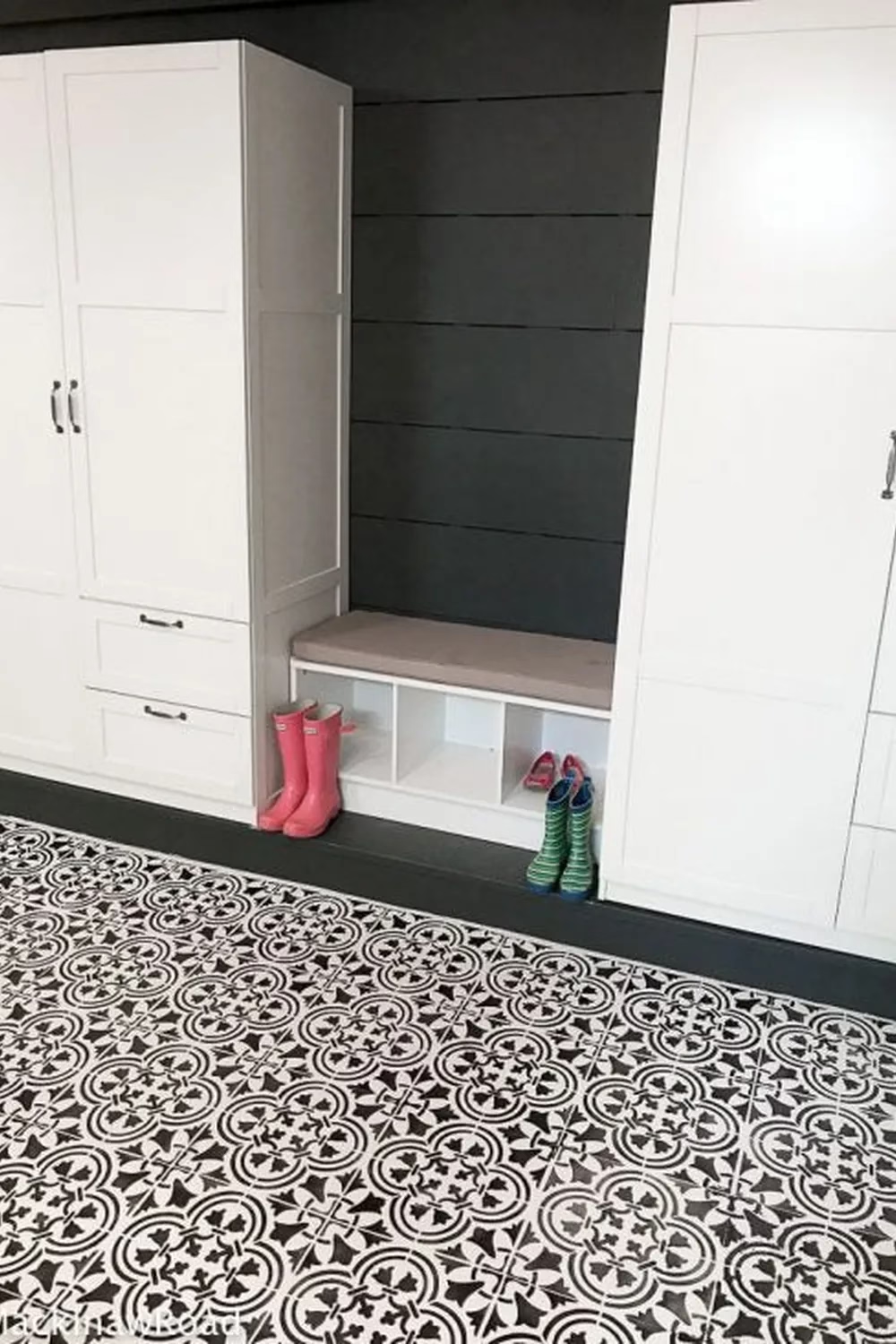
The bold black and white pattern gives this utility floor the look of classic encaustic tile. Against the white cabinets and the dark shiplap wall behind the bench, the swirling medallions feel crisp instead of busy. Even the pink and green rain boots pop against it.
To recreate it, look for a large Portuguese-style floor stencil and work in a grid so the repeats line up. Keep the base color bright white and the pattern a deep black for contrast. Before you start, test the slab for moisture and confirm your paint is rated for floors.
2. Gray and White Hexagon Geometry Painted on Concrete
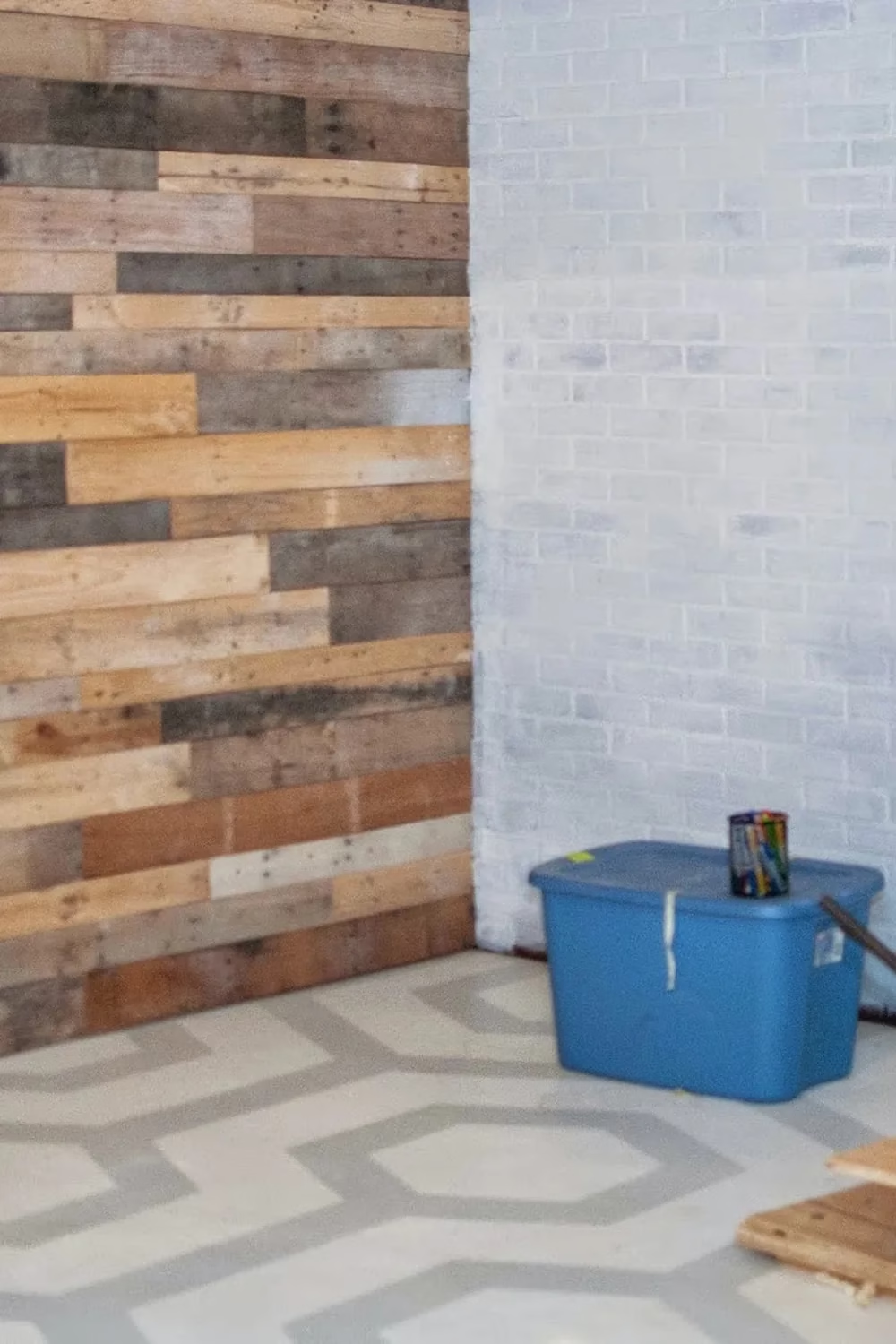
Soft gray bands form interlocking hexagons across a creamy white floor, and the effect is calm and graphic. Next to the patchwork pallet wood wall and the whitewashed brick, the pattern keeps a playroom feeling light. The neutral palette lets toys and bright bins stand out.
Use painter's tape to mark out the shapes, then fill in the gray bands with floor paint. Measure the room first so the hexagons land evenly at the edges. One caution: the creator saw primer chip after standing water, so treat this as a look to admire and prep your slab carefully.
3. Large Black Floral Stencil on a Pale Slab
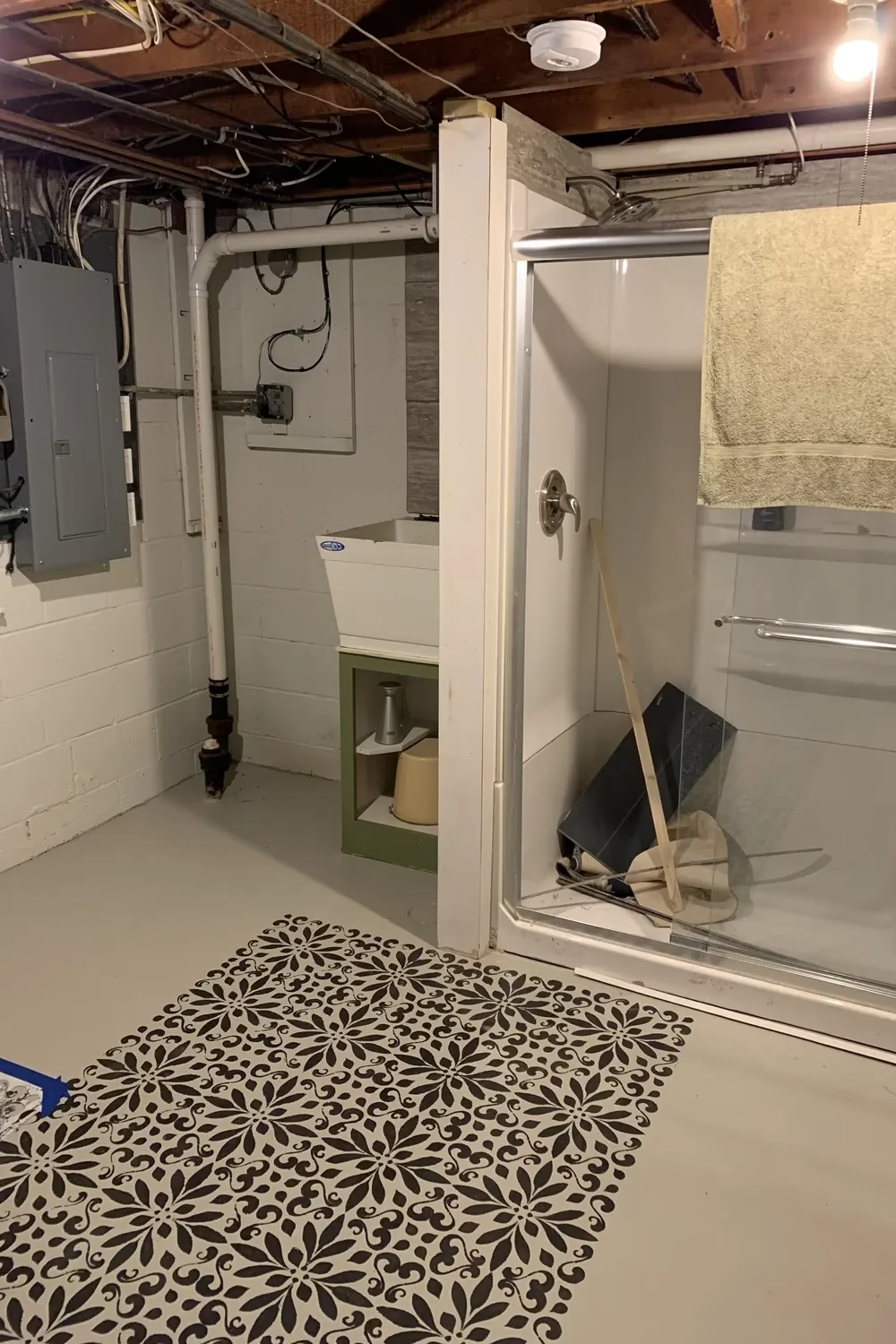
A big, star-like floral stencil in charcoal sits on a soft putty-colored floor, and even half finished it already warms up a rough utility corner. The pattern reads like a rug or a patch of cement tile, which makes the exposed joists and pipes feel less stark.
This one suits anyone who wants impact without redoing the whole room. Pick a large-scale stencil so fewer repeats are needed, and tape each section down firmly. Roll thin coats of paint to keep edges sharp. Check for dampness first, since floors near a shower and sink see more moisture.
4. Charcoal Epoxy with Blue, White, and Gray Flecks
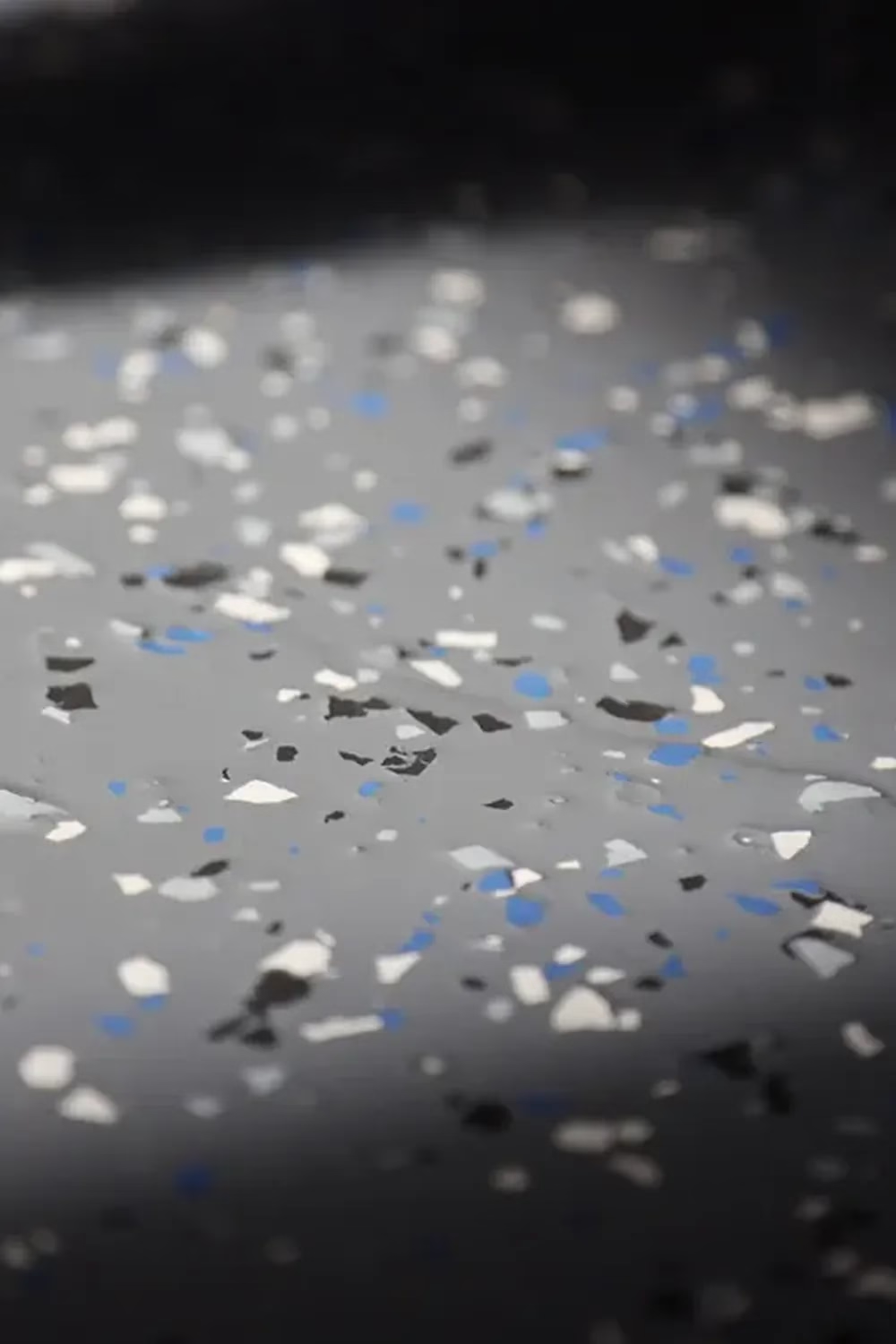
Up close, this floor looks like terrazzo. A deep charcoal base is scattered with white, black, gray, and small blue chips that catch the light. The glossy finish makes the color look rich, and the flecks hide dust and small scuffs well.
This is a commercial coating, so ask a flooring pro about a flake epoxy system and which chip blend suits your space. Pick a flake mix with one accent color, like the blue here, to tie into your decor. Have your slab tested for moisture before any coating goes down.
5. Dense Gray Flake Epoxy in a Bright Storage Room
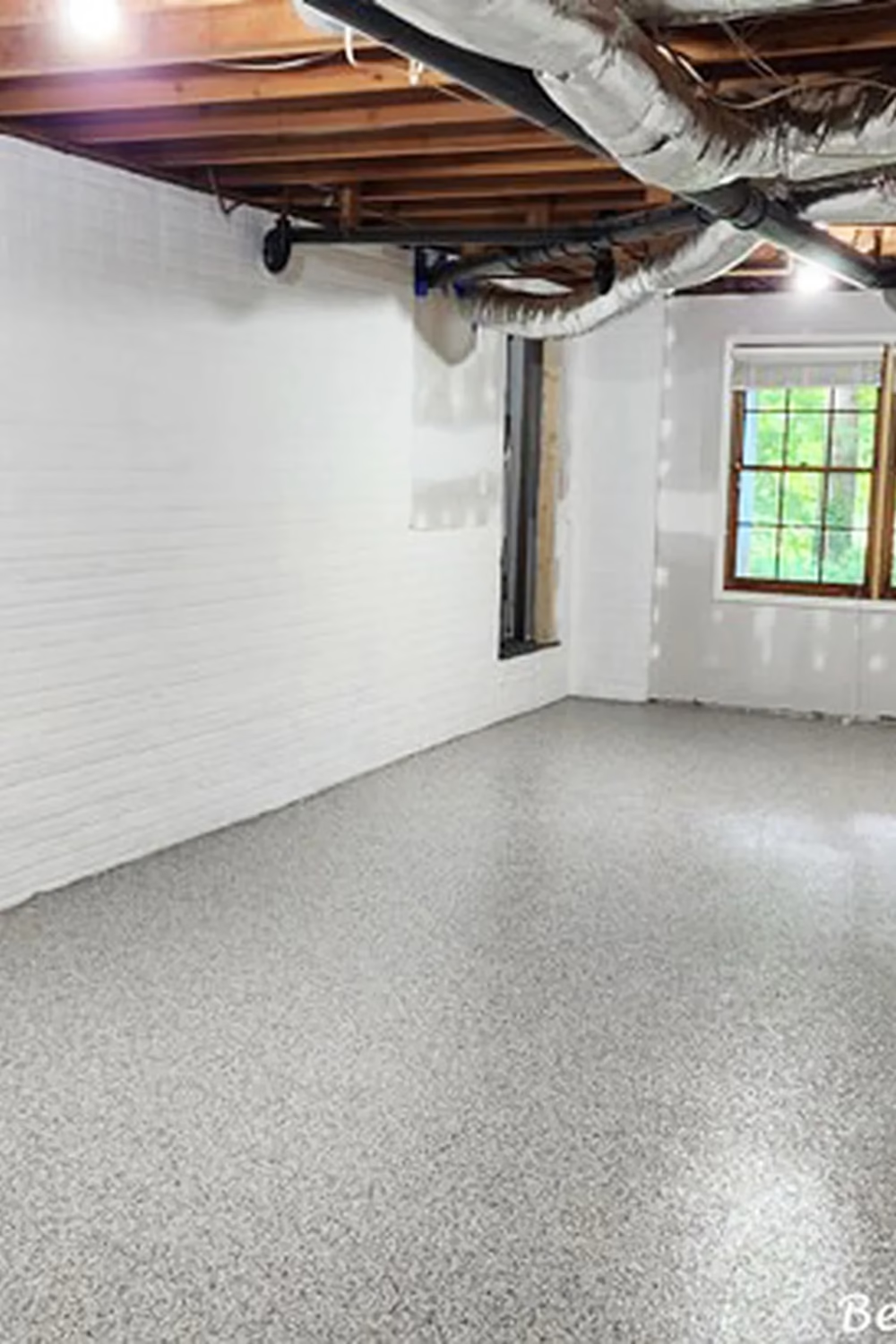
A tightly packed gray and white flake floor turns a plain storage basement into a clean, airy space. With white painted brick walls and a window letting in daylight, the speckled surface bounces light around instead of swallowing it. The exposed joists above stay part of the look.
This was a professionally applied coating, so ask installers about a full-broadcast flake finish, which gives this dense, even texture. It suits busy family basements where you want something easy to sweep and mop. Ask about moisture testing and prep before you book.
6. Staggered Subfloor Panels Across a Bare Room
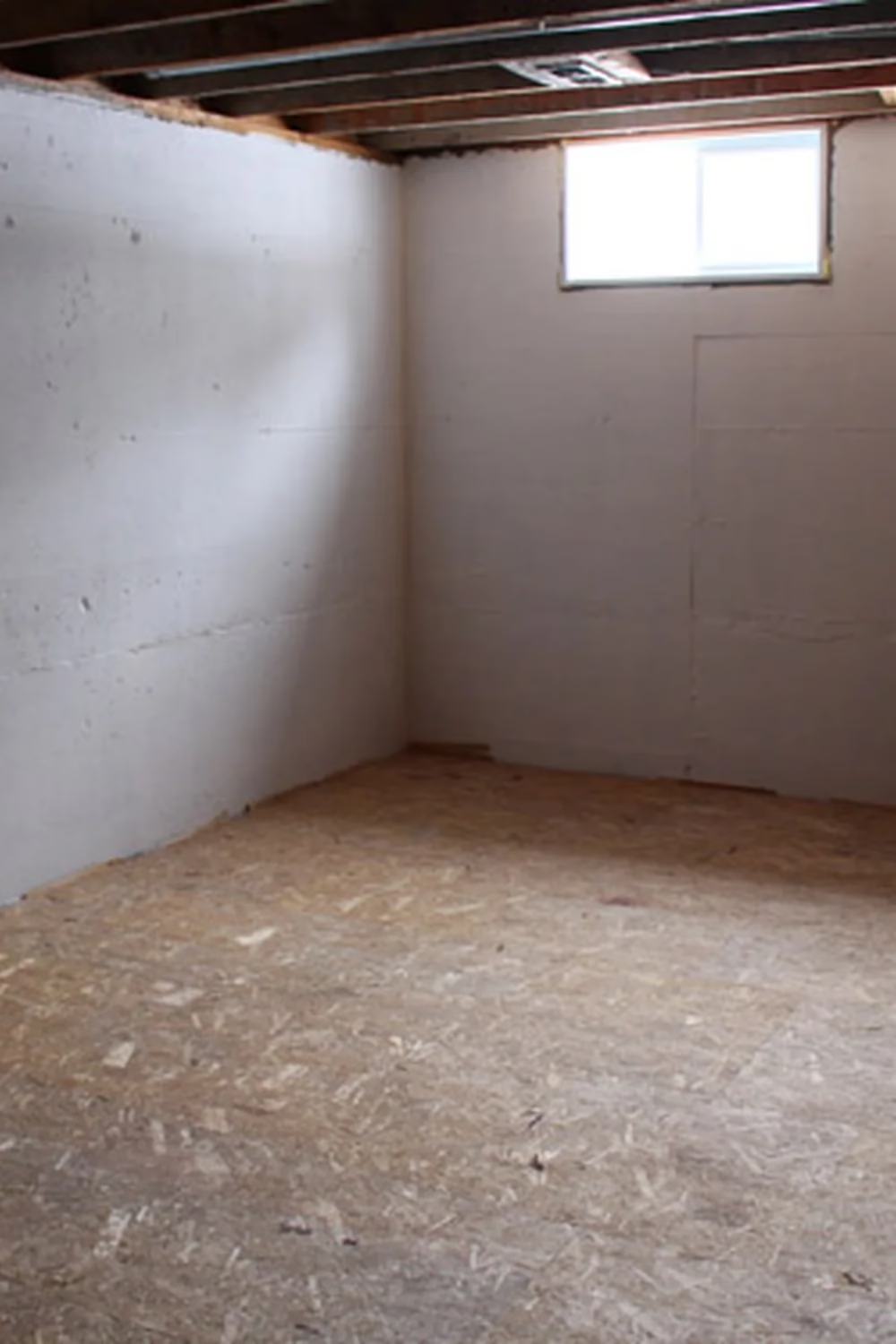
Here the room is wrapped in pale walls with an exposed joist ceiling, and a continuous staggered-panel subfloor makes the ground look level and ready. It's not a finished surface, but it shows how a clean base can make a raw space feel like a real room in progress.
If you want this, ask a vendor about raised subfloor panels made for basements, and plan a final floor to go on top. It suits people building out a basement in stages. Treat it as a foundation step, and check your slab for moisture first.
7. Soft Gray Carpet Tiles in a Basement Office
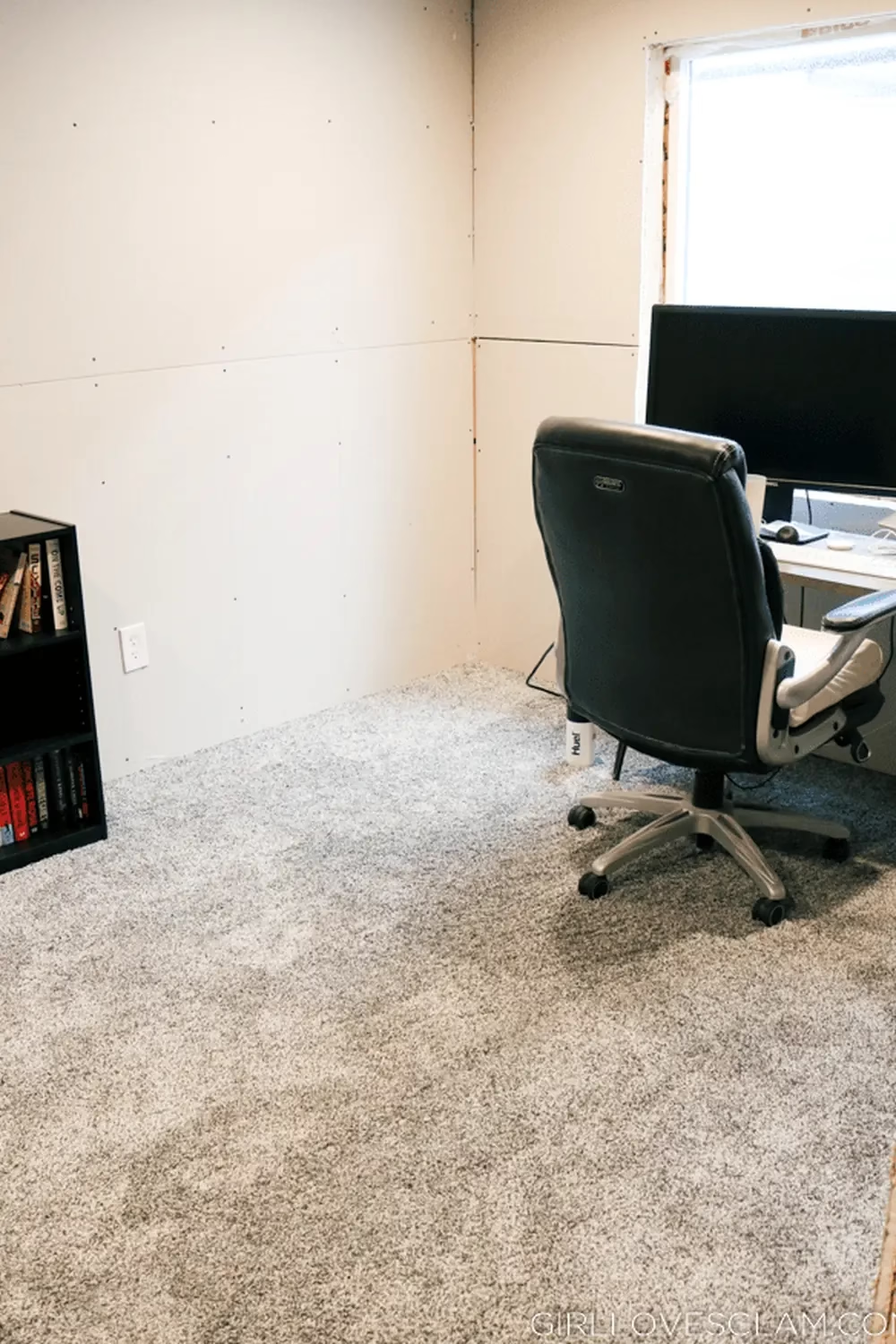
A cushy, heathered gray carpet makes this basement office feel quiet and warm underfoot, even with unfinished drywall still in view. The speckled tones hide wear from the rolling desk chair and pair easily with black furniture and a bookshelf.
Carpet tiles are handy because you can replace a single square if it gets stained. Choose a low pile for chair wheels and lay them in a staggered direction for a smooth look. They are not a fix for damp concrete, so make sure your slab is dry first.
8. Mottled Charcoal Stain Over Raw Concrete
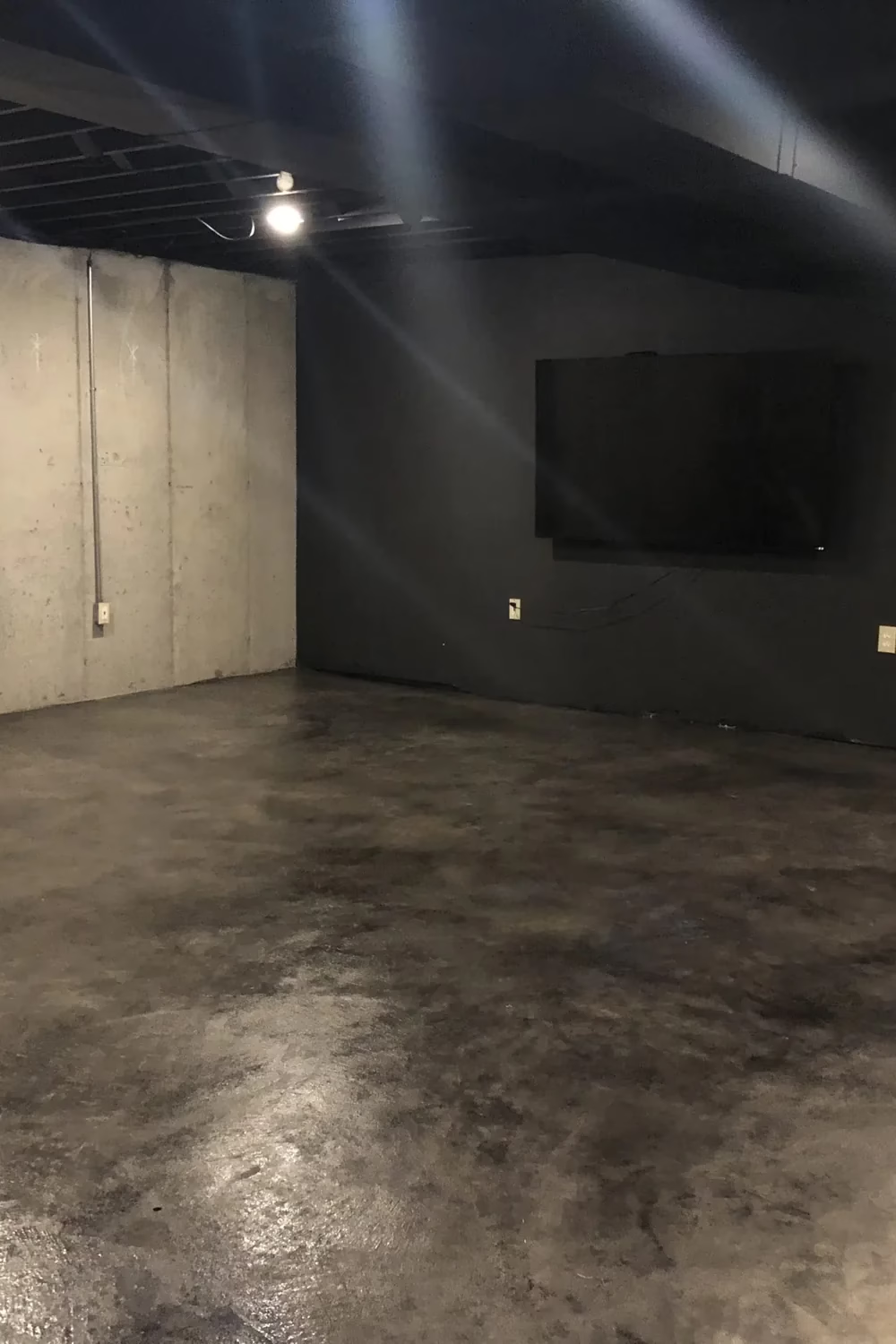
Dark, cloudy stain lets the concrete show its natural character here. The charcoal and brown patches create depth that looks a bit like worn leather, and it suits the black ceiling and moody walls around the wall-mounted TV.
Ask a pro or read product directions on semi-transparent concrete stain, and expect variation, since no two floors take it the same way. Add a sealer for easier cleaning. This look suits a media room or a hangout space. Test a small corner first and check your slab for moisture.
9. Painted Faux Rug with White Stripes and Fringe
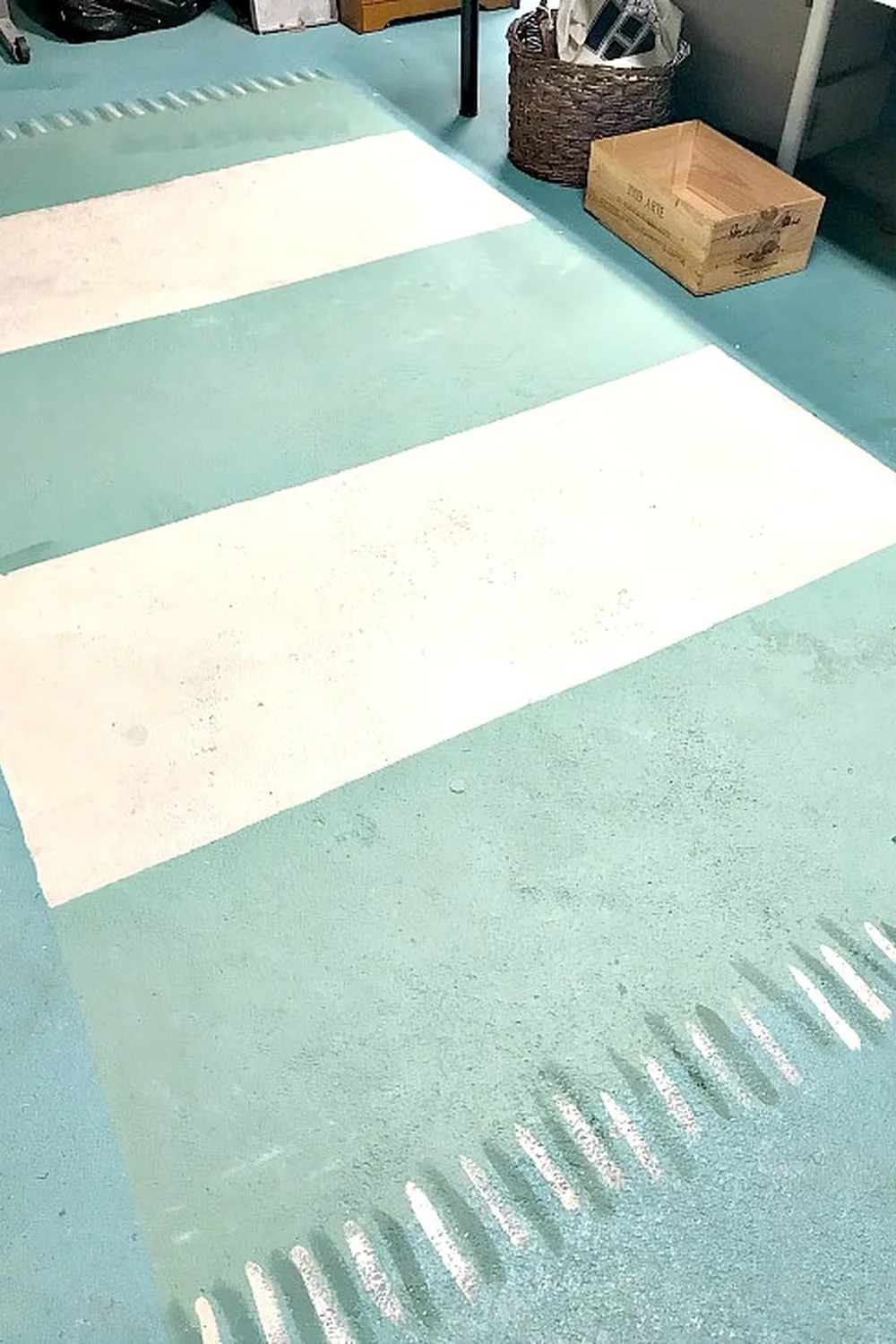
Two wide white stripes and a row of fringe, all painted on a soft aqua floor, create a rug that never needs vacuuming. In a workshop corner with a basket and wine crate, it adds a bit of personality and defines the space.
To copy it, tape off the stripes and use a small stencil or cut tape for the fringe tips. Pick floor paint in two colors with good contrast. It's a budget-friendly swap for a real rug, and perfect for a small corner. Check slab moisture before painting.
10. Warm Mottled Brown Stain on Basement Concrete
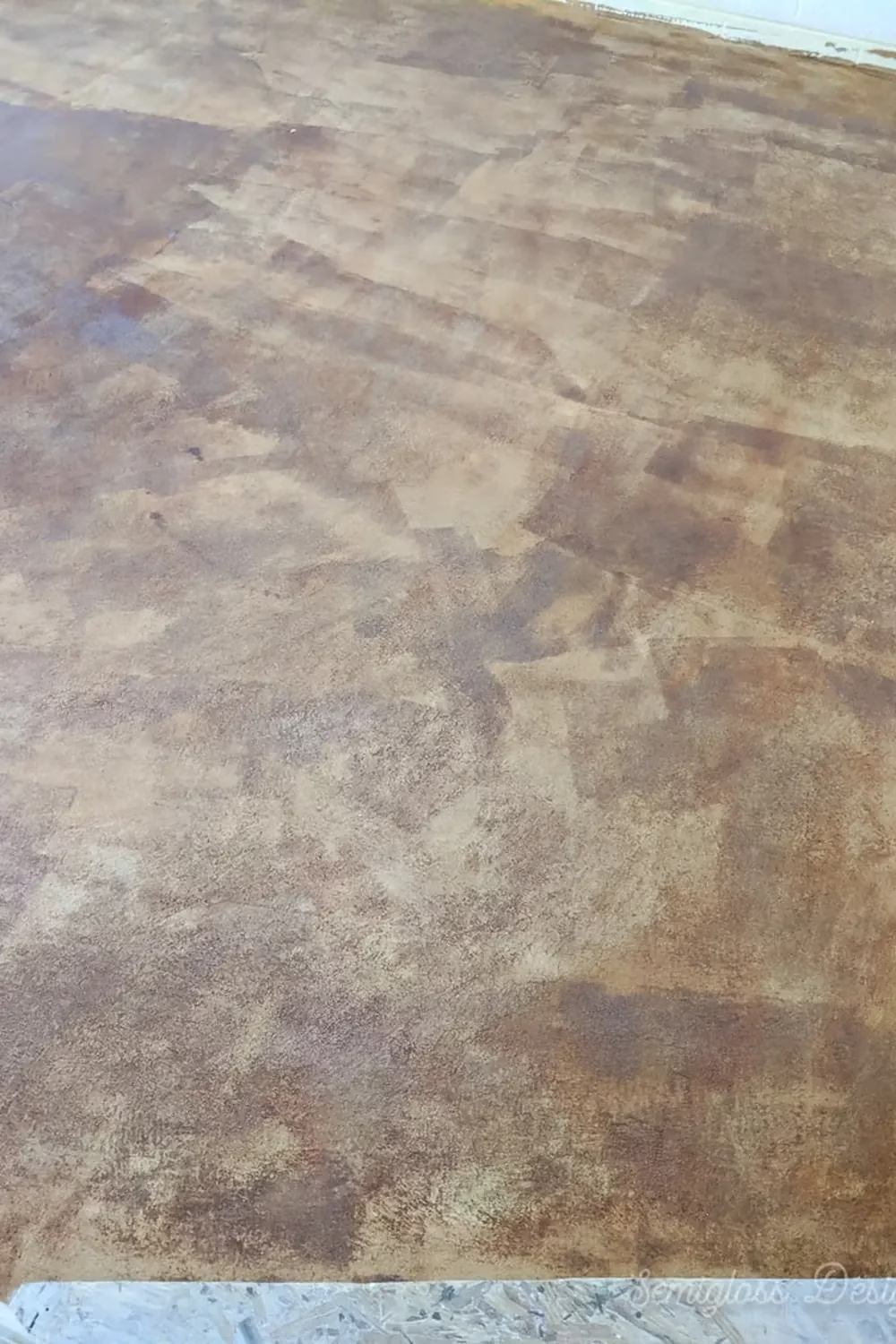
Where gray can feel cold, this warm blend of caramel, rust, and tan feels earthy and lived in. The patchy, cloudy finish looks like aged leather and gives a basement floor a lot of depth before the walls are even built.
Apply the stain in layers with a sponge or brush for a variable look, and let each layer dry. It suits a rustic or cozy family room. Remember that stain does not stop water coming through, so check your slab for moisture and seal properly.
11. Painted Brown-Gray Floor Under White Beams
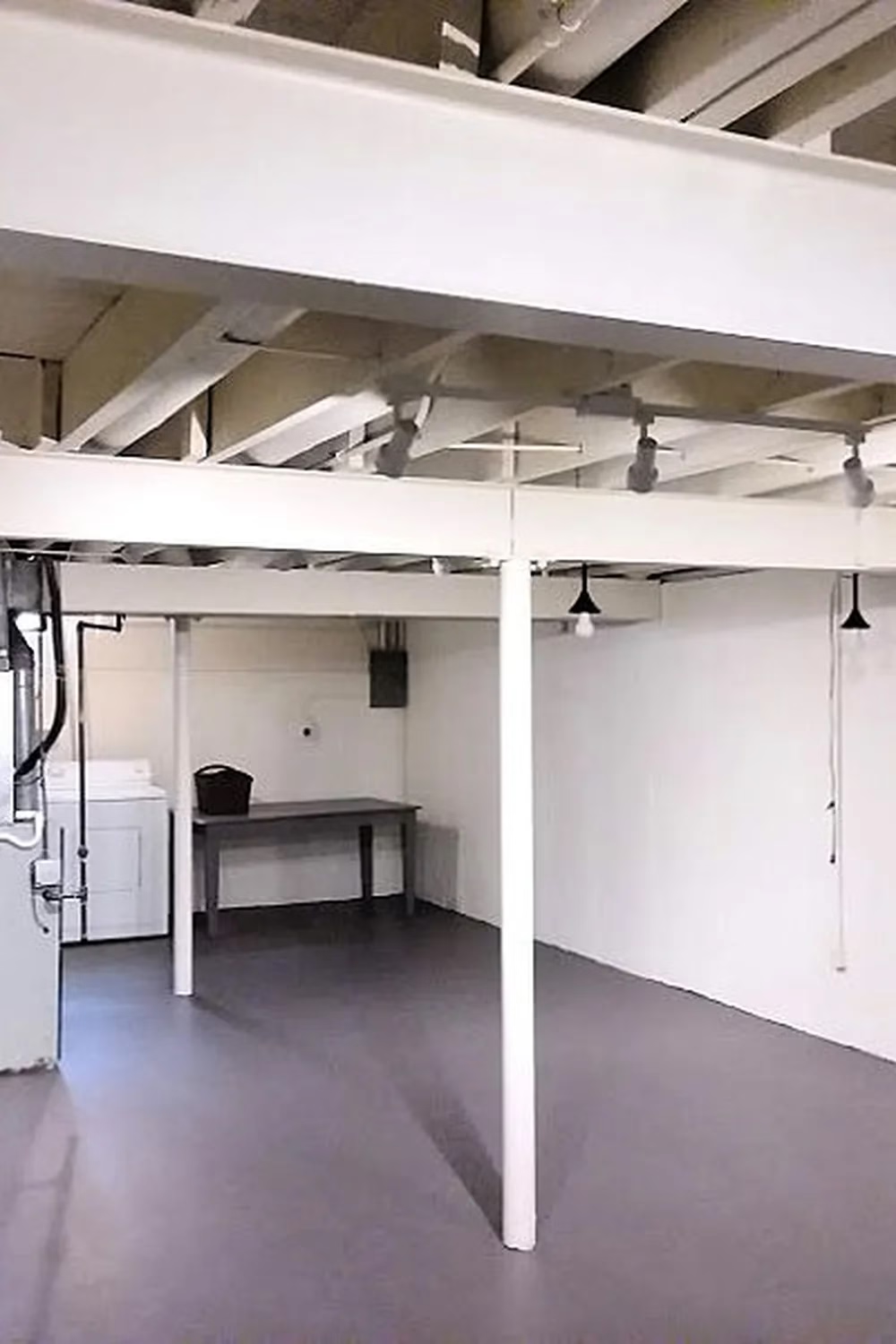
A single even coat of slate-brown paint pulls this whole basement together. White beams, posts, and walls feel fresh against it, and the laundry area and table suddenly look tidy. Simple, clean, and hard to get wrong.
This was done over an old floor, so the condition and type of the old flooring matter. Have older resilient flooring checked before you sand or disturb it. Choose a floor paint made for the job and keep the walls and beams white to keep things bright.
12. Black Octagon Wallpaper Pattern as a Floor Accent
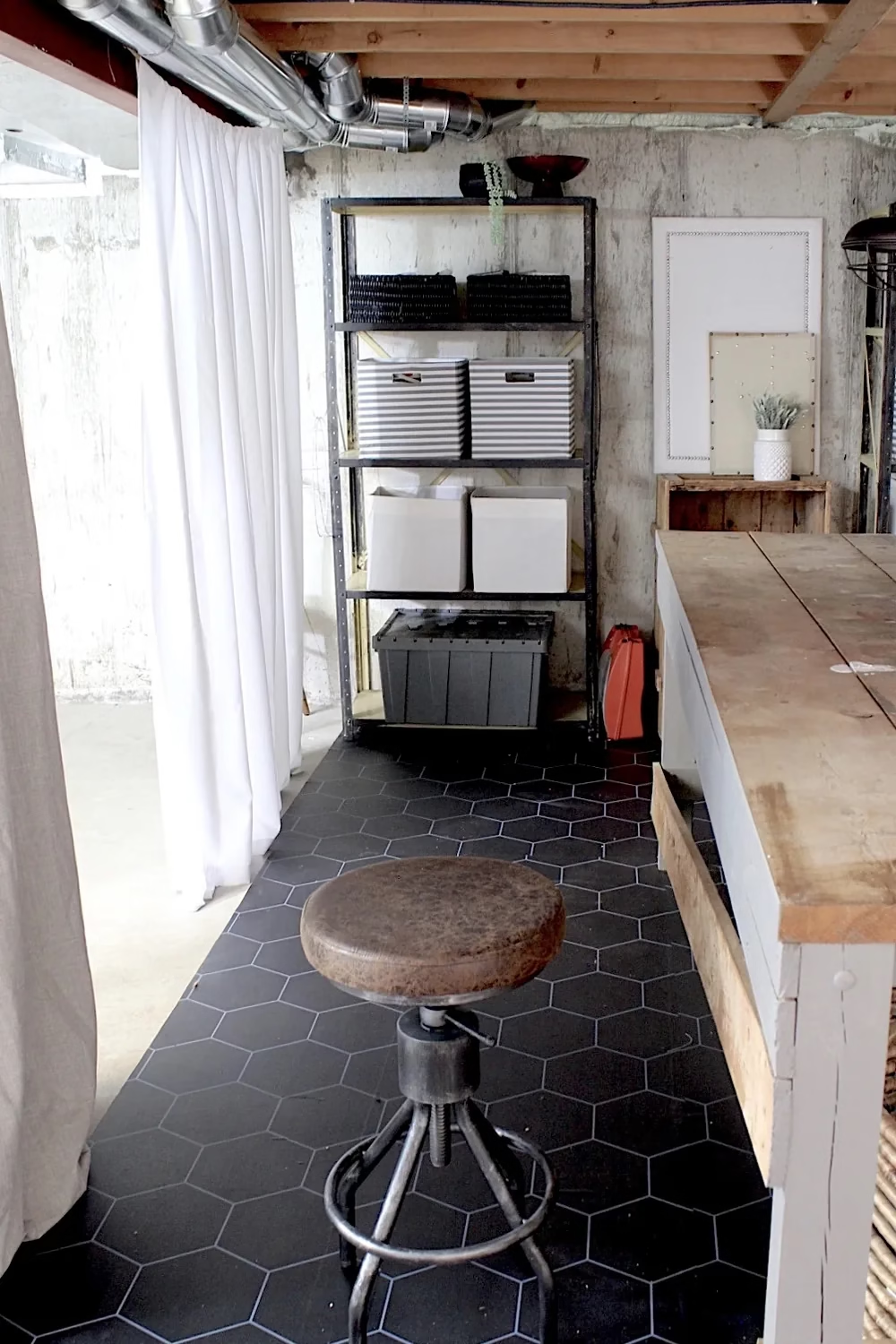
Black octagon shapes with thin pale outlines form a path through this raw art studio, and they look just like hex tile. Paired with the weathered wood table, metal shelf, and leather stool, the floor adds a graphic touch to a rough space.
This is an experimental idea using adhesive wallpaper, so durability and slip resistance are unknown. It may work best as a low-traffic accent. If you want the same look with more staying power, ask a vendor about real hex tile or a painted pattern, and check slab moisture first.
13. Rainbow Foam Tile Island on Bare Concrete
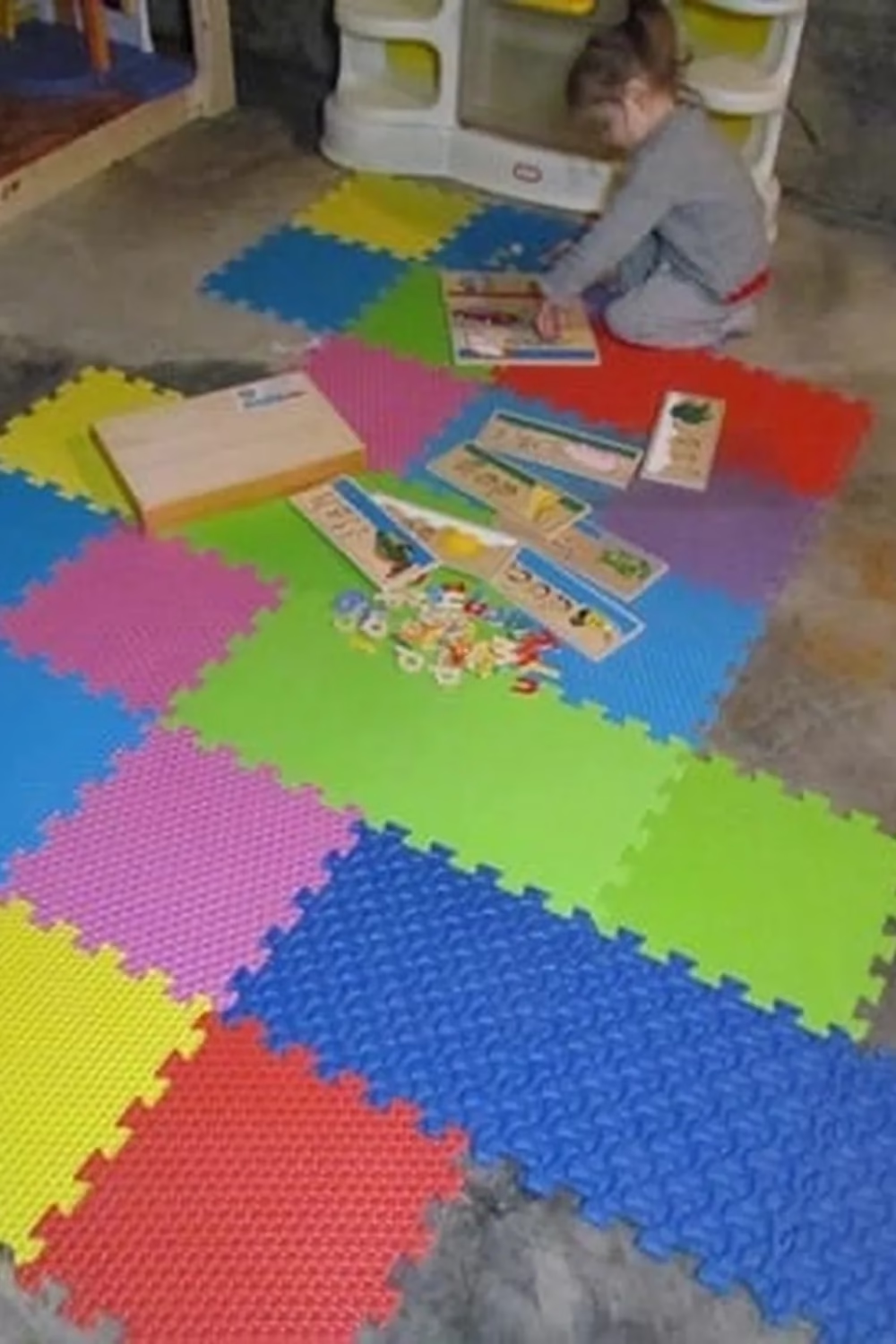
This play corner works because the colorful foam tiles sit like a rug on the raw slab. Red, yellow, blue, green, pink, and purple squares lock together with wavy edges, so a toddler gets a soft spot for puzzles while the rest of the concrete stays open. The textured tops add grip, and the bright patchwork makes the area feel like a defined zone.
Start with a small set of interlocking tiles and build a rectangle sized to your play area. Because the tiles lift out, you can move them for cleaning. Keep in mind that foam is cushioning, not waterproofing. Check your slab for moisture before using it, and make sure the material suits kids. It is a budget friendly pick for families who want to leave the floor unfinished.
Pick Your Favorite and Start Small
You do not have to redo the whole basement at once. Try a stencil in the laundry corner or a faux rug under a seating area, and see how much the room changes.
Save this list so you can come back when you are ready to grab a roller or a stain kit. Your basement floor is a blank slate, so have fun with it.