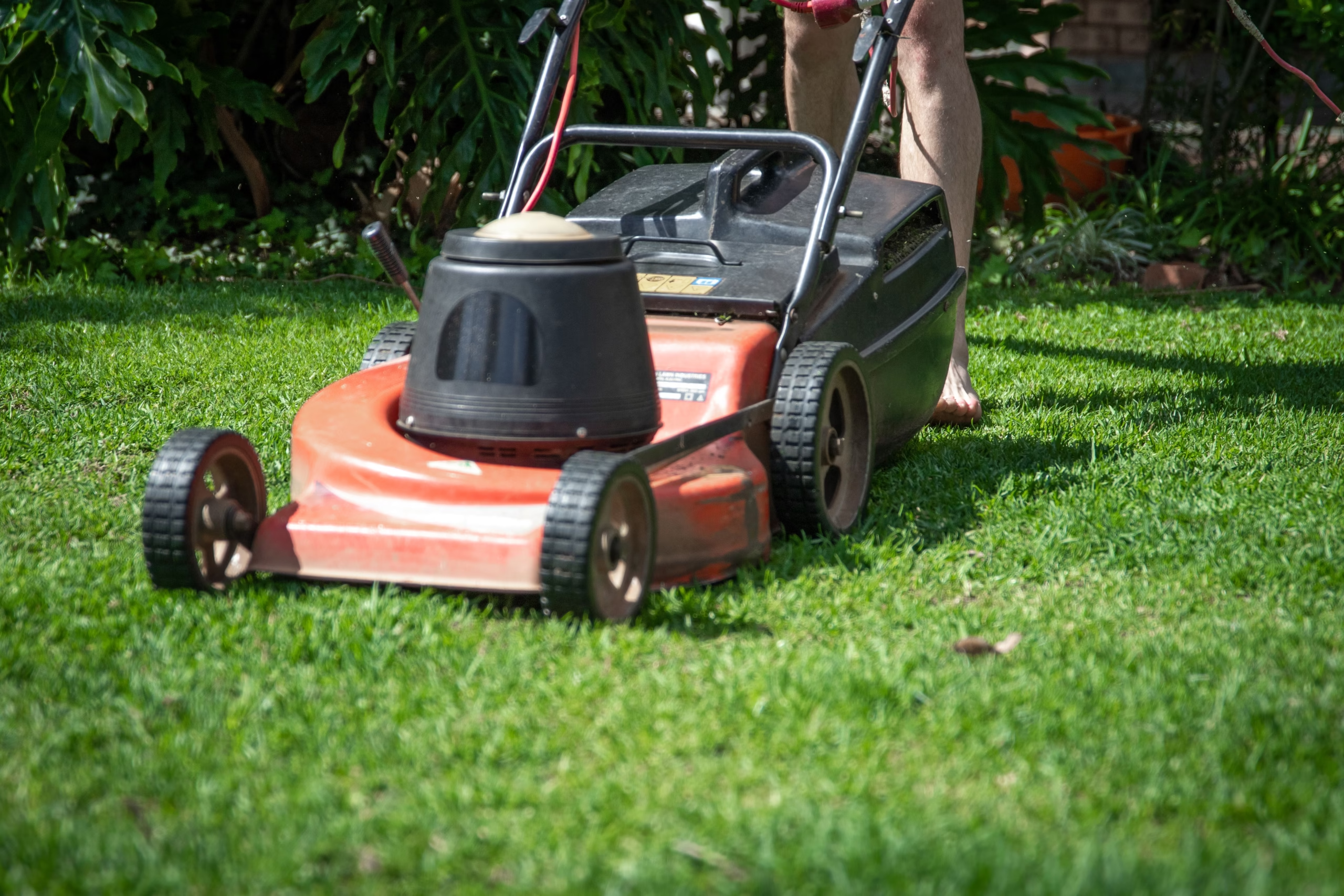
A certain amount of vibration is normal when a lawnmower is running, particularly on petrol machines with moving engine components and a fast-spinning blade underneath the deck. What is not normal is a sudden increase in vibration, a new rattling sensation through the handle or a mower that feels noticeably rougher than it did before. When that happens, it is worth paying attention rather than simply carrying on until the lawn is finished.
Excessive vibration often signals that something has changed mechanically. In some cases the cause is relatively simple, such as grass or debris collecting unevenly around the blade. In others, it can point to a bent blade, a loose fixing, worn bearings or damage following an impact with a stone, tree root or other solid object. The important thing is not to assume that the machine will simply settle down on its own.
Common Causes of Lawnmower Vibration
An Unbalanced Blade
One of the most common causes is an unbalanced blade. A mower blade is designed to spin evenly at high speed, with its weight distributed equally around the centre mounting point. If one side becomes damaged, worn or has had more metal removed during sharpening than the other, the blade can lose that balance. At low speed, the difference might seem insignificant, but once the blade is rotating rapidly it can create a pronounced vibration that travels through the deck and up into the handle.
This is why blade sharpening needs to be done carefully. Restoring the cutting edge is only part of the job. The blade should still be balanced afterwards so that one side is not heavier than the other. A blade that has been sharpened repeatedly over several seasons may eventually reach the point where replacement is more sensible, especially if there are deep chips, visible distortion or uneven wear.
A Bent Blade or Impact Damage
A bent blade can create similar symptoms. This often happens after the mower strikes something solid. Even if the machine continues running, the blade may no longer rotate in a perfectly level plane. That can produce both vibration and an uneven cut, with one side of the mowing path appearing lower than the other. If the vibration began immediately after hitting an object, the blade should be one of the first things checked.
It is worth remembering that impact damage can extend beyond the blade itself. On some machines, a severe strike can affect the blade mounting point, spindle, crankshaft or associated bearings. Continuing to use the mower when one of these components is damaged can make the problem worse. If the blade appears straight but the machine still vibrates heavily, a deeper mechanical inspection may be needed.
Grass Build-Up Under the Deck
Grass build-up underneath the deck can also cause imbalance. Damp clippings tend to stick to the underside of the mower and can accumulate unevenly around the cutting area. If a large mass collects on one side, the rotating blade and airflow within the deck may be disrupted enough to create vibration or rough running. This is particularly common after mowing wet or very long grass.
Cleaning the deck regularly can prevent this. The mower should always be switched off and made safe before any inspection or cleaning is attempted, following the manufacturer’s guidance for the specific machine. Once the underside is clear, the mower may run noticeably more smoothly if debris was the cause.
Loose Fixings
Loose fixings are another possibility. Mowers experience constant vibration during normal use, and over time bolts, screws and brackets can work slightly loose. Handles, engine mounts, deck components and blade fixings can all contribute to rattling or vibration if they are no longer secure. Sometimes the sensation that seems to be coming from deep inside the machine is actually a loose handle assembly amplifying an otherwise minor movement.
This is one reason a visual inspection can be worthwhile before assuming there is a serious internal fault. Look for anything obviously loose, cracked or misaligned, while avoiding any attempt to work around moving components. If a fixing repeatedly loosens after being tightened correctly, that may indicate wear elsewhere rather than being an isolated problem.
Wheel Problems and Uneven Height Settings
Wheel condition can also affect how smooth a mower feels. A damaged wheel, worn bearing or loose axle can create vibration as the machine moves across the lawn, although this usually feels different from the rapid vibration caused by a blade. The problem may be most noticeable on hard ground, paths or flatter areas where the wheels are turning consistently.
Uneven wheel height settings can contribute to a rough ride too. If one corner of the mower sits differently from the others, the deck may move more aggressively over bumps and dips in the lawn. This may not produce severe vibration on its own, but it can make other problems feel worse and can reduce cutting consistency.
Engine Problems on Petrol Mowers
On petrol mowers, the engine introduces several additional possibilities. Rough running caused by a dirty air filter, old fuel, a worn spark plug or carburettor issues can feel like vibration through the handle. The key difference is that engine-related vibration may also be accompanied by uneven revs, hesitation, difficulty starting or changes in exhaust note.
If the mower sounds as though it is struggling rather than simply shaking, the engine should be considered alongside the cutting system. Regular servicing helps prevent many of these problems, particularly where oil, filters, plugs and fuel condition are involved.
Drive System Faults on Self-Propelled Mowers
Self-propelled machines can develop vibration through their drive system as well. Worn belts, damaged pulleys or drive components that are no longer aligned correctly can create unusual movement or noise. These faults may be most noticeable when the drive is engaged and may lessen when the mower is stationary.
Where replacement components are needed, it is important to use parts that match the specific make and model. A supplier such as Ron Smith can help identify suitable blades, belts and service parts where the original component is worn, damaged or difficult to match. Fitting the wrong blade or drive part can create new vibration problems rather than solving the original one.
Vibration on Electric and Battery-Powered Mowers
Electric and battery-powered mowers are generally smoother and quieter than petrol models, which can make a new vibration particularly obvious. The same basic principles still apply: blade condition, balance, debris, loose fixings and wheel issues should all be considered. Because the motor itself usually runs smoothly, sudden vibration on an electric machine often points quite strongly towards the blade or cutting assembly.
Is the Lawn Itself the Problem?
The surface being mown should not be ignored either. A mower used over very uneven ground, exposed tree roots or repeated ridges will naturally transmit more movement to the operator. If the vibration only appears in one part of the garden and disappears on level ground, the mower may not actually be at fault. On the other hand, a consistent vibration across every surface is much more likely to have a mechanical cause.
How to Narrow Down the Cause
Think About When the Vibration Started
It can be helpful to think about when the vibration started. A gradual increase over several months might point towards normal wear, a dull or unbalanced blade, loose fittings or bearings beginning to deteriorate. A sudden change immediately after hitting something suggests impact damage. Vibration that only appears when the drive is engaged may indicate a belt or transmission issue, while roughness accompanied by erratic engine speed may be related to fuel or ignition.
Listen to the Sound It Makes
The sound the mower makes can offer another clue. A metallic rattling noise may suggest loose parts, while a deeper repetitive thump can indicate an imbalanced rotating component. Grinding noises should not be ignored, as they can point towards damaged bearings or contact between parts that should not be touching.
When to Stop Using the Mower
What matters most is knowing when to stop using the machine. Mild vibration that is clearly caused by long grass or an uneven lawn is one thing. Violent shaking, sudden new noises, visible blade damage or vibration after a major impact are different. Continuing to run the mower can increase the risk of further damage and may create a safety issue.
Final Words
A lawnmower that starts vibrating more than usual should therefore be treated as a symptom rather than an annoyance. The cause may be as simple as compacted grass under the deck or a loose handle, but it could also involve the blade, spindle, bearings or drive system. Checking the obvious things early can prevent a small problem turning into an expensive one.
Regular maintenance makes all of this easier. Keeping the deck clean, inspecting the blade, checking fixings and dealing with unusual sounds promptly can all help preserve smooth operation. A mower does not need to feel completely vibration-free, but it should feel consistent. When that familiar feel changes, the machine is usually telling you that something deserves attention.